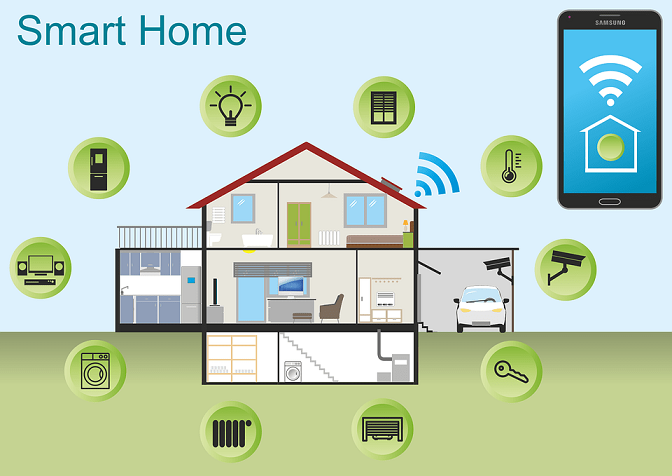
If you walked into a typical “smart home” three years ago, you might have been impressed by a voice-controlled lightbulb or a vacuum that occasionally got stuck on a shag rug. Fast forward to 2026, and the “Smart Home” has been replaced by something much more profound: Physical AI.
We are no longer just talking to screens or apps. We are living alongside machines that can see, feel, and interact with the physical world in real-time. From humanoid assistants that can fold a basket of laundry to sensors that predict a pipe leak before a single drop of water hits the floor, Physical AI is turning our houses into living, breathing partners in our daily lives.
But what exactly is Physical AI, and how is it moving from the high-tech laboratory into our humble living rooms? Let’s break down the revolution that’s happening right under our roofs.
What is Physical AI? (Beyond the Buzzwords)
For a long time, AI lived in a digital box. It was a brain without a body—great at writing emails or generating images, but useless if you needed someone to actually pick up a glass of water.
Physical AI is the marriage of “Digital Brains” (Large Language Models and Machine Learning) with “Physical Bodies” (Robotics and Smart Sensors). Unlike traditional robots that follow rigid, pre-programmed rules, Physical AI systems use multimodal perception. They “see” using computer vision, “feel” using haptic sensors, and “learn” through experience.
In short: If ChatGPT is a brilliant librarian, Physical AI is the librarian who can actually walk over, climb a ladder, and hand you the book.
The Three Pillars of the 2026 Home
The transformation of our homes is resting on three major technological shifts that have reached “peak maturity” this year.
1. Humanoid and Service Robotics
At CES 2026, we saw the first wave of truly capable home humanoid assistants, like the LG AI Home Robot and the latest iterations from Figure and 1X. These aren’t just toys; they are powered by Vision-Language-Action (VLA) models. This means you can tell a robot, “Clean up the mess in the kitchen,” and it understands that “mess” means putting dishes in the dishwasher and wiping the counter—not just moving objects around.
2. Invisible Smart Sensors (The “Nervous System”)
The best AI is the kind you don’t see. Modern homes are being built with Ultra-Wideband (UWB) and Matter-certified sensors. These sensors track your “gait” (how you walk) to detect if you’ve had a fall, or use acoustic AI to “hear” if a pipe is vibrating oddly, indicating a future burst. These “Spy Eyes” (as some call them) are becoming privacy-focused, processing data locally rather than in the cloud.
3. Edge Computing (Privacy First)
A major trend in 2026 is Edge AI. Instead of sending your home’s video and audio data to a distant cloud server, the “thinking” happens locally on specialized chips inside your devices. This makes the AI faster (no latency) and keeps your private life inside your four walls, addressing the massive privacy concerns that plagued early smart devices.
Real-World Benefits: How It Actually Changes Your Day
How does this look on a typical Tuesday morning? It’s not about “sci-fi” gadgets; it’s about removing the friction of existence.
The “Zero-Labor” Kitchen: Smart ovens now use sensors to identify the exact protein you’ve put in and cook it perfectly based on its weight and moisture levels. Specialized robotic arms can now assist with chopping or stirring, reducing meal prep time by 70%.
Proactive Longevity Care: For the elderly, Physical AI acts as a 24/7 guardian. Systems like Samsung’s EdgeAware can detect 12 distinct sounds, from breaking glass to a prolonged cough. This allows seniors to “age in place” with dignity, cutting hospital admissions by over 30% through early intervention.
Energy Orchestration: Your home “learns” your schedule. It doesn’t just turn off the lights when you leave; it predicts when you’ll be back and pre-cools only the rooms you use, integrating with your EV charger to pull power when rates are lowest.
The Challenges: It’s Not All Smooth Sailing
Despite the magic, bringing robots into human spaces is incredibly difficult.
The “Manipulation” Problem: A robot might know how to pick up a mug, but does it know how to pick up a broken mug without making it worse? Handling irregular, soft, or fragile objects remains a major bottleneck in robotics.
The “Uncanny Valley”: As robots become more humanoid, they can sometimes feel “creepy.” Design is shifting toward “functional aesthetics”—robots that look like tools or friendly helpers rather than hyper-realistic humans.
The Trust Factor: Giving a machine “agency” to move through your home requires a high level of trust. If a digital AI makes a mistake, it’s a typo. If a physical AI makes a mistake, it’s a broken heirloom or a safety hazard.
Future Trends: What’s Coming Next?
As we look toward 2027 and 2030, the trend is moving toward “Robotic Synergy.”
Agentic AI Ecosystems: Your vacuum will “talk” to your front door sensor. If the sensor sees you carrying heavy groceries, it tells the vacuum to move out of the way and the kitchen lights to brighten.
Soft Robotics: We are moving away from “clunky metal” robots to “soft” materials (bio-inspired) that are safer to have around children and pets.
Autonomous Maintenance: Imagine a robot that doesn’t just see a leak but uses its internal “tools” to tighten the valve or apply a temporary patch until a plumber arrives.
Conclusion: Embracing the New Roommate
Physical AI isn’t about replacing humans; it’s about freeing humans from the mundane chores that eat up our weekends. By delegating the “doing” to intelligent machines, we reclaim the most valuable resource we have: Time.
Whether it’s a smart sensor saving you from a flooded basement or a robot helping you keep the house tidy, the goal of 2026 tech is to make the “machine” part of life invisible so the “human” part can flourish. Your home is finally starting to look out for you, rather than the other way around.
No Responses