Key Takeaways
The malware playbook of the new era is centered on stealth, fileless attacks, and multi-stage attacks, rendering the old standard signature-based security ineffective.
The modern threats need real-time response and behavior-based endpoint malware detection in place of reactive protection.
EDR has progressed to a detection tool to an intelligence-driven proactive solution that is necessary when dealing with advanced malware threats.
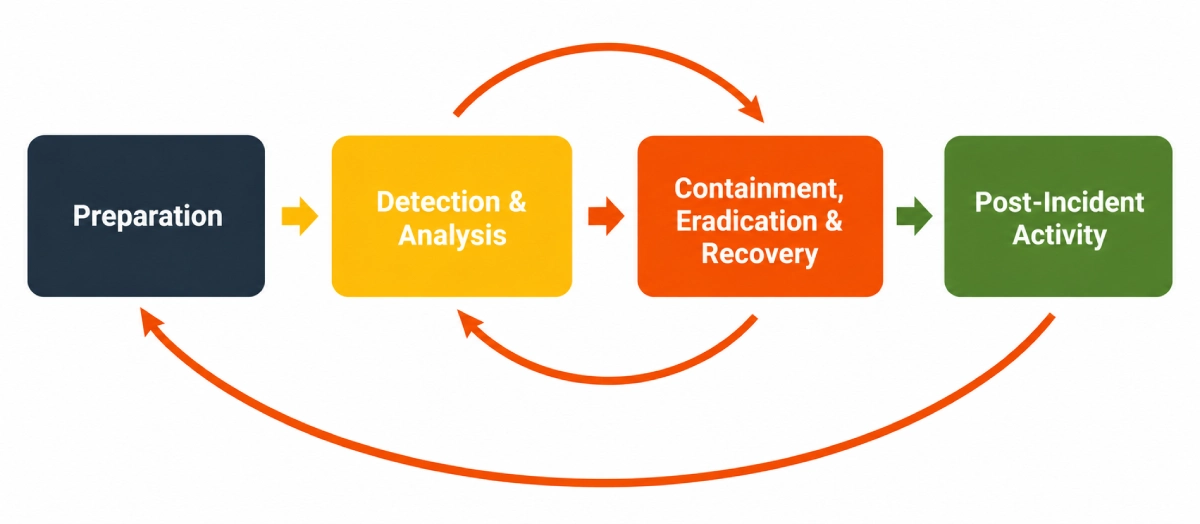
An effective malware incident response playbook assists organizations to identify, contain and remediate attacks effectively and promptly.
An integrated strategy, such as Zero Trust, continuous monitoring, patch management, and user awareness, offers the most effective protection against endpoint malware.
There are no longer cyber threats than before. What was once regarded as an old school malware loud, signature-based, and easily detectable, has turned out to be much more sophisticated, covert, and relentless. The attackers of this day are founded on a fresh malware playbook, which is focused on evasion, speed, and adaptability. This has made conventional security tools useless, and organizations need to reconsider their strategies of protecting and responding to malware at the endpoint.
Endpoint Detection and Response (EDR) is at the heart of this change. Having been conceived as a detection tool, EDR now must adapt to be proactive and intelligent-driven to deal with new malware threats, such as fileless attacks, living-off-the-land methods, and AI-driven campaigns.
This blog examines the current malware playbook and the ways in which it is distinct from the old methods and how EDR needs to evolve to provide advanced malware protection to endpoints.
Understanding the New Malware Playbook & Upcoming Trends
The malware landscape has changed significantly over the years, evolving from simple file-based viruses into highly sophisticated and stealthy cyber threats. Modern attackers now use advanced techniques that focus on evasion, persistence, and long-term access rather than immediate disruption. With the rise of fileless attacks, AI-enhanced malware, cloud-focused threats, and multi-stage attack campaigns, traditional security solutions often struggle to detect malicious activity effectively.
Understanding these emerging malware trends is essential for organizations to strengthen cybersecurity defenses and reduce the risk of data breaches, operational disruption, and financial loss.
Malware has evolved from traditional file-based attacks to more advanced, adaptive, and stealthy attack methods.
Attackers increasingly use fileless malware that operates directly in system memory instead of installing malicious files on devices.
Modern attacks often abuse legitimate system tools such as PowerShell and Windows Management Instrumentation to avoid detection.
Living-off-the-Land (LotL) techniques allow malicious activity to blend with normal system operations, making detection much harder for traditional security solutions.
Malware attacks are now commonly multi-stage campaigns involving initial access, persistence, lateral movement, and eventual data theft or disruption.
Polymorphic malware can continuously modify its code or behavior to bypass signature-based security systems.
AI-enhanced malware is becoming more common, enabling attackers to automate evasion and improve attack effectiveness.
Advanced persistence techniques help attackers maintain long-term access by exploiting credentials, cloud identities, and deeply embedded system implants.
Cloud-native attacks are increasing as organizations continue shifting workloads and infrastructure to cloud environments.
Why Traditional Endpoint Security Falls Short
Old-fashioned antivirus software is no longer sufficient. They are also based on common signatures and pre-written rules that render them useful in addressing old threats but not the new ones. They find it especially challenging to deal with unknown threats, fileless attacks, and encrypted payloads, which conceal malicious intent.
This has led to the use of endpoint malware detection strategies that concentrate on behavior as opposed to static indicators. Nevertheless, it is not enough to be detected. Organizations require mechanisms that are capable of detecting threats and responding to them immediately and efficiently.
Learn about the Shadow AI Visibility Gap
AI Exposure Feel Invisible Until It’s Too Late
Build AI-Aware DLP That Actually Works
What EDR is and Why It Matters.
EDR focuses on continuous endpoint visibility, real-time threat detection, and rapid incident response. Rather than relying on prior knowledge of threats, EDR systems monitor endpoint activity in real time, detect anomalies, and facilitate quick response. Rather than relying on prior knowledge of threats, EDR systems monitor endpoint activity in real time, detect anomalies, and facilitate quick response.
As a component of the new malware playbook, EDR is indispensable in offering better malware defense to endpoints. It allows security teams to identify subtle signs of compromise, investigate the incident, and take action prior to the harm becoming too widespread.
An example of a Modern Malware Playbook.
A simplified example of a malware playbook can help to better understand how the attacker works. The first access is usually the beginning of an attack and is most frequently obtained through phishing emails, stolen credentials, or an unpatched vulnerability. The hacker does not leave any unmistakably malicious files, but instead he executes them in memory which goes unnoticed.
Persistence is then defined by altering system settings or developing cron jobs once inside. The attacker then travels across the network, gaining privileges, and attacking other endpoints. The last phase is data exfiltration, encryption, or disrupting the system. This systematic and procedural method puts a premium on the significance of an effective malware incident response playbook.
Redefining EDR for the New Malware Landscape
1. Shift from Signature-Based to Behavior-Based Detection
EDR needs to go beyond the more traditional signature-based approaches and concentrate on detecting suspicious activity and anomalies. The ability to analyze patterns, including any suspicious process of execution, script execution, or privilege escalation, is essential to detect malware early since modern malware tends not to leave traces, making it hard to identify.
2. Continuous Monitoring and Real-Time Response
Since contemporary attacks occur in several steps, EDR solutions must offer sustained visibility of endpoints, and they should offer real-time detection and response. This assists security teams to detect threats in progress and contain them before they can grow into bigger breaches.
3. Detecting Fileless and Living-off-the-Land Attacks
As the number of attackers employing legitimate system tools to commit malicious activities continues to rise, EDR should be able to discern between the normal and abnormal use of the utilities. It is necessary to monitor such tools as PowerShell and WMI to reveal any threats.
4. Integration Across Endpoints, Cloud, and Identity
Attacks of today tend to be cross-gadget, cross-cloud, and cross-identities. EDR must become more integrated, aligning with cloud security and identity systems to allow having a comprehensive picture and identify threats that travel across various environments laterally.
5. Automation, AI, and Proactive Threat Hunting
Increasingly, searching for threats becomes automated, utilizing AI, and moving proactively needs to use AI and automation to detect and respond to malware in a timely way to keep up with its pace and complexity. Moreover, reactive threat hunting options enable the security teams to detect silent threats before they can raise an alert, and the attacker’s dwell time is minimized.
Visibility and Detection
Forensics, Response and Prevention
Malware Detection Engine
The Future of Endpoint Security
Cyber threats are ever-changing, and defensive strategies must be changed accordingly. It is possible that in the future more attackers will use AI; fileless and memory-based attacks are going to be even more common, and there will be even more targeted attacks on organizations. To remain competitive, companies need to invest in improved endpoint security malware protection that unifies detection, response, and prevention into one strategy.
Conclusion
The emergence of the new malware playbook represents a fundamental shift in how cyberattacks are executed, with attackers becoming more intelligent, stealthy, and reliant on sophisticated techniques to bypass traditional defenses. In response, EDR must evolve into a comprehensive solution capable of detecting, analyzing, and responding to threats in real time. Fidelis Endpoint exemplify this evolution by combining continuous endpoint monitoring, behavioral analytics, automated response, and deep forensics to quickly identify and contain advanced threats. With capabilities such as real-time visibility, threat intelligence integration, and automated incident response, modern EDR platforms enable organizations to reduce dwell time and respond proactively to complex, multi-stage attacks.
Ultimately, adaptability is the cornerstone of modern cybersecurity. As threats continue to evolve, security strategies and tools must evolve alongside them. Investing advanced endpoint defense is no longer optional; it is a critical requirement for building long-term resilience against increasingly sophisticated malware campaigns.
The post The New Malware Playbook and How EDR Must Adapt appeared first on Fidelis Security.
No Responses