We’ve all been there. You’ve had a long, productive day, your eyes are heavy, and all you want to do is sink into your pillow and drift off into a blissful, eight-hour slumber. But the moment your head hits the linen, your brain decides it’s the perfect time to replay an embarrassing moment from five years ago or start drafting a to-do list for a project that isn’t due for a month.
Suddenly, it’s 2:00 AM. You’re staring at the ceiling, calculating exactly how many hours of sleep you’ll get if you fall asleep right now. (Spoiler: It’s never enough.)
If this sounds familiar, you aren’t alone. In our hyper-connected, blue-light-saturated world, quality sleep has become the ultimate luxury. But here’s the secret: great sleep isn’t something that just happens to you; it’s something you engineer. This is the core of Sleep Hygiene.
In this guide, we’re going to look at the science of deep rest, the “magic” evening rituals that signal your brain to shut down, and the cutting-edge gadgets that can turn your bedroom into a high-tech sleep sanctuary. Let’s dive in!
What Exactly is Sleep Hygiene?
Don’t let the name fool you—sleep hygiene has nothing to do with how often you wash your sheets (though fresh linens are a vibe!). Instead, it refers to the set of habits and environmental factors that dictate the quality and duration of your rest.
Think of your body like a high-performance vehicle. You wouldn’t just slam the brakes at 100 mph and expect the engine to be fine. Your brain needs a “cooldown” period to transition from the high-beta waves of daytime productivity to the slow-delta waves of deep, restorative sleep.
How It Works: The Circadian Rhythm
Your sleep-wake cycle is governed by your Circadian Rhythm, an internal biological clock that responds primarily to light and temperature.
Melatonin: When it gets dark, your pineal gland releases melatonin, the “vampire hormone” that tells your body it’s time to sleep.
Cortisol: In the morning, light triggers cortisol to wake you up and keep you alert.
Good sleep hygiene is essentially the art of not “confusing” this clock. When you check your phone at midnight, the blue light mimics the sun, telling your brain, “Hey! It’s morning! Stop the melatonin!” No wonder we feel “wired but tired.”
The Benefits: Why Deep Rest is Your Superpower
When you master your sleep hygiene, you aren’t just “getting more rest.” You are upgrading every facet of your human experience:
Cognitive Clarity: Deep sleep is when your brain’s “Glymphatic System” flushes out metabolic waste (basically, it’s a nightly car wash for your brain).
Emotional Resilience: Ever notice how everything feels like a disaster when you’re tired? Sleep helps you process emotions, making you less reactive and more grounded.
Physical Recovery: This is the only time your body truly repairs muscle tissue and balances hormones like ghrelin and leptin (which control your hunger).
Immune Strength: A well-rested body produces more cytokines—proteins that help your immune system target infections.
The Best Evening Rituals for a “Brain Shutdown”
Technology is great, but some of the best sleep hacks are completely free. The goal of a ritual is to create a Pavlovian response: do these things in the same order every night, and eventually, your brain will start feeling sleepy the moment you start the first step.
1. The “Digital Sunset”
At least 60 minutes before bed, put your phone in another room. If you absolutely must use it, enable “Night Shift” mode, but the best practice is to disconnect entirely. This removes the “infinite scroll” dopamine hits that keep your brain in an active state.
2. The 3-2-1 Rule
3 Hours before bed: Stop eating heavy meals. Digestion is an active process that raises your core body temperature.
2 Hours before bed: Stop working. Close the laptop. No more “just one more email.”
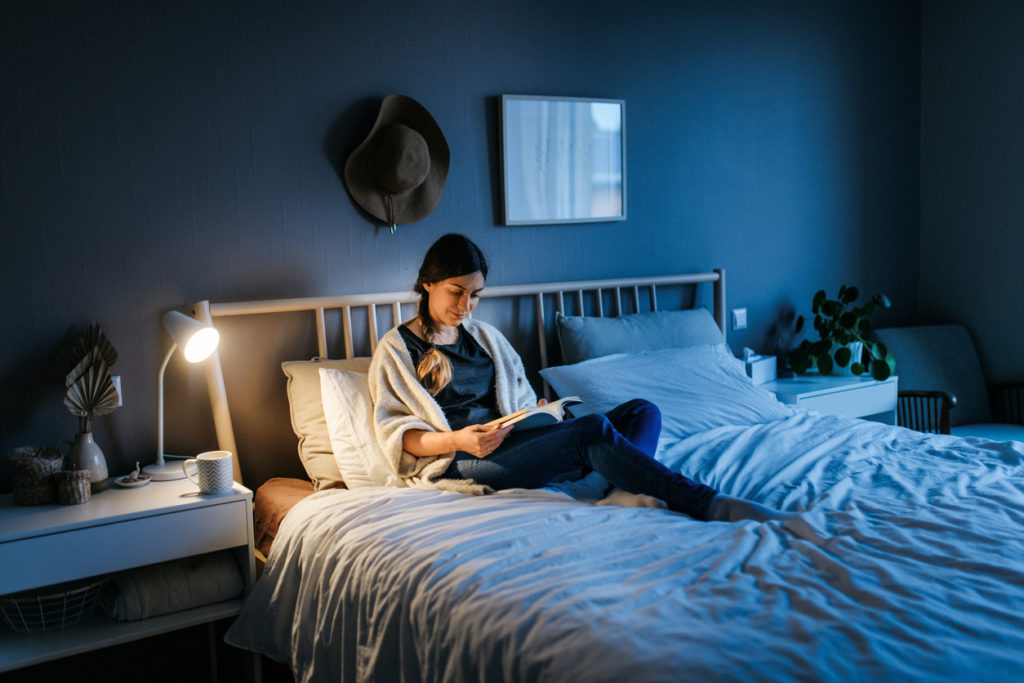
1 Hour before bed: No screens. Read a physical book, journal, or meditate.
3. The Temperature Drop
Science shows the ideal bedroom temperature is around 65°F (18°C). Taking a warm bath or shower about an hour before bed actually helps this process. When you step out of the warm water into the cool air, your core temperature drops rapidly, which is a powerful biological trigger for sleep.
4. The “Brain Dump” Journaling
If “racing thoughts” are your primary enemy, spend five minutes writing down everything you need to do tomorrow. By getting it out of your head and onto paper, you give your brain permission to stop “looping” those thoughts.
Top Sleep Gadgets to Enhance Your Rest
If you’re ready to take your sleep hygiene to the professional level, the “Sleep Tech” industry has some incredible tools to help.
1. Sunrise Alarm Clocks (e.g., Hatch Restore)
Being jolted awake by a loud, buzzing smartphone is a terrible way to start the day—it spikes your cortisol immediately. A sunrise alarm mimics a natural dawn, gradually brightening the room with warm light over 30 minutes. It wakes you up gently from a light sleep phase rather than ripping you out of a deep one.
2. Smart Rings (e.g., Oura Ring)
If you don’t measure it, you can’t manage it. A smart ring tracks your heart rate variability (HRV), body temperature, and sleep stages (Light, Deep, REM). Seeing the data helps you realize that “Oh, that glass of wine at 9:00 PM actually ruined my deep sleep for the whole night.”
3. Temperature-Regulated Mattress Pads (e.g., Eight Sleep)
This is the “Ferrari” of sleep tech. These pads circulate water to keep your bed at a precise temperature all night. They can even auto-adjust based on your biometrics—cooling down if the AI detects you are getting too hot and restless.
4. Weighted Blankets
Using “Deep Pressure Stimulation,” weighted blankets simulate the feeling of being hugged. This has been shown to increase serotonin levels and decrease the “fight or flight” response, making it perfect for anyone with nighttime anxiety.
5. Blackout Curtains or 100% Blackout Masks (e.g., Manta Sleep)
Even the tiny LED light from your air conditioner can interfere with your sleep quality. Total darkness is non-negotiable for maximum melatonin production.
The Challenges: Why is Sleep So Hard?
Despite the benefits, “perfect” sleep hygiene is hard to maintain. We face several modern hurdles:
Revenge Bedtime Procrastination: When you feel like you didn’t have control over your daytime, you “stay up late” to reclaim your freedom, even if you’re exhausted.
Social Jetlag: Staying up until 3:00 AM on Saturday and waking up at noon “breaks” your internal clock, making Monday morning feel like a nightmare.
The “Caffeine Tail”: Caffeine has a half-life of about 5–6 hours. That 4:00 PM espresso is still in your system at 10:00 PM, blocking the receptors that tell your brain it’s tired.
Future Trends: Where is Sleep Tech Heading?
The future of rest is Predictive and Personalized. We are moving away from simple “trackers” and toward “interventionists.”
AI Soundscapes: Imagine a white noise machine that listens to your breathing and subtly changes the frequency of the sound to guide you back into deep sleep if it senses you are waking up.
Smart Pajamas: Fabrics are being developed with “bioceramic” technology that reflects your body’s infrared heat back into your muscles to speed up physical recovery while you sleep.
Circadian Lighting Systems: Entire homes will eventually be fitted with lights that automatically shift from bright “blue-rich” light in the morning to “amber-red” light in the evening, mirroring the sun perfectly without you having to lift a finger.
Conclusion: Sleep is a Skill, Not an Accident
Mastering your sleep hygiene is one of the highest-leverage things you can do for your health, career, and happiness. It’s not about buying every gadget on the market; it’s about creating a sacred space and a consistent rhythm.
Start small. Tonight, try a “Digital Sunset” 30 minutes before bed. Tomorrow, try keeping your room a few degrees cooler. Over time, these small “1% gains” will compound into a life where you wake up feeling genuinely refreshed, energized, and ready to take on the world.
Sweet dreams!
No Responses