If you’ve checked the news lately, you’ve probably noticed that gold is having a “moment” that has lasted… well, decades. But as we move through 2026, the yellow metal isn’t just about heavy lockers and shiny necklaces anymore. The rise of digital gold has completely flipped the script on how we build wealth.
With gold prices hovering near historic highs—and some analysts even eyeing the $5,000 per ounce mark by the end of the year—everyone is asking the same question: Should I buy the real thing or go digital?
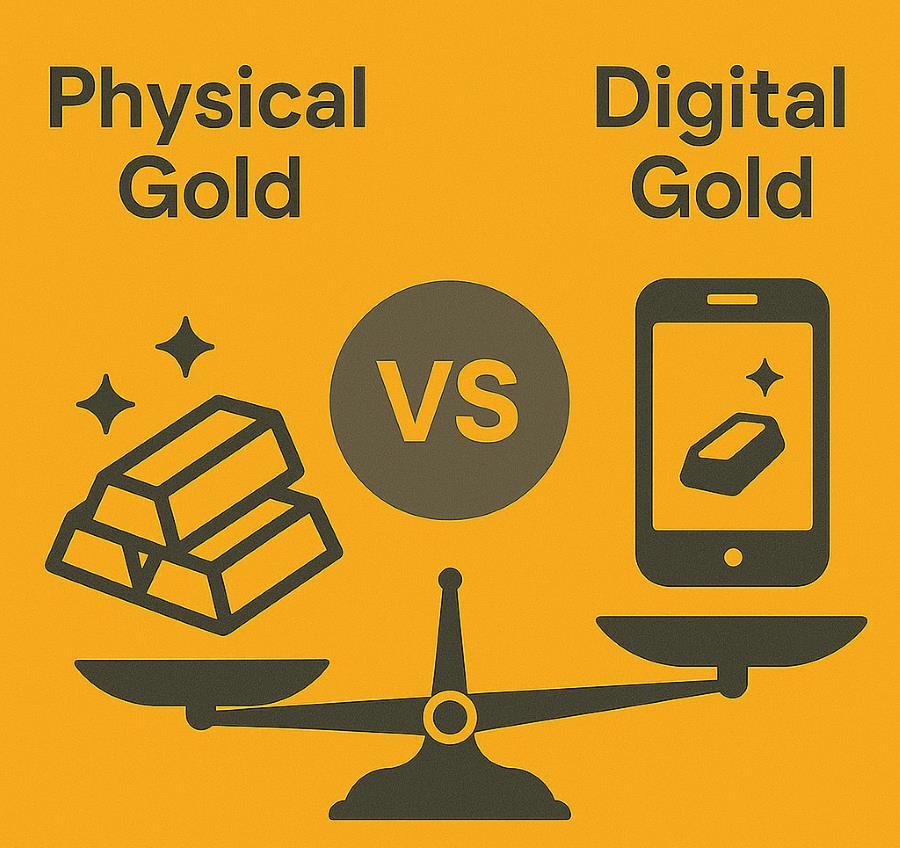
Whether you’re a traditionalist who loves the weight of a gold coin in your palm or a tech-savvy saver who wants to buy gold with a swipe, this guide is for you. We’re breaking down the Physical Gold vs. Digital Gold debate for 2026 to help you decide which belongs in your portfolio.
What Exactly Are We Comparing?
Before we pick a winner, let’s define our contenders.
1. Physical Gold: The Timeless Classic
This is the gold your grandparents trusted. It includes:
Gold Jewelry: Beautiful to wear, but often comes with high “making charges.”
Gold Coins & Bars: Pure 24K gold intended solely for investment.
Bullion: Large-scale gold bars held by serious investors.
The main appeal? Tangibility. You own it, you hold it, and it doesn’t depend on a website or an app to exist.
2. Digital Gold: The Modern Marvel
Digital gold is a way to buy 24K gold online. When you buy ₹100 or $10 worth of gold on an app, the provider buys a corresponding amount of physical gold and stores it in a high-security, insured vault in your name.
Micro-investing: You can start with as little as ₹1.
Instant Liquidity: Buy or sell 24/7 with a tap.
No Storage Hassle: You don’t need a bank locker; the provider handles the security.
Why Gold is Surging in 2026
To understand which format is better, we have to look at the “why” behind the 2026 gold rush.
Central Bank Buying: Central banks across the globe are stockpiling gold at record rates to diversify away from the dollar.
Inflation Hedge: Even as inflation cools in some sectors, gold remains the ultimate “insurance policy” for your purchasing power.
Geopolitical Tensions: In an uncertain world, investors flock to the “Safe Haven” status of gold.
The Deep Dive: Physical vs. Digital Gold
Let’s look at how these two stack up across the factors that actually matter to your wallet.
1. Costs and “Hidden” Fees
Physical Gold: If you’re buying jewelry, you’re looking at making charges (labor costs) ranging from 8% to 25%. You also pay GST (usually 3%) on the total price. When you sell it back, you often lose that making charge entirely. Even with coins, there is a “premium” over the market rate.
Digital Gold: There are no making charges! However, most platforms have a buy-sell spread of about 3% to 6%. This means if you buy and immediately sell, you’ll lose a small percentage. You still pay 3% GST on the purchase.
Winner: Digital Gold for pure investment; Physical Gold if you actually want to wear it.
2. Safety and Storage
Physical Gold: Storing it at home is a theft risk. Storing it in a bank locker costs money—anywhere from ₹2,000 to ₹15,000 annually.
Digital Gold: It’s stored in “Brink’s-grade” insured vaults. You don’t pay for the vaulting (usually for the first few years), and it’s fully insured. The risk here is Platform Risk—what if the app shuts down? In 2026, most major players are backed by established refiners like MMTC-PAMP or SafeGold, adding a layer of trust.
Winner: Digital Gold for convenience and cost-savings on storage.
3. Liquidity: How Fast Can You Get Cash?
Physical Gold: You have to physically go to a jeweler. They will test the purity (which might involve a small fee or melting) and then give you a price. It’s a process.
Digital Gold: It’s instant. Need cash for an emergency at 2 AM? Sell your digital gold and the money hits your bank account via UPI or bank transfer almost immediately.
Winner: Digital Gold (by a landslide).
4. Purity and Trust
Physical Gold: Unless you buy “Hallmarked” gold, you’re relying on the jeweler’s word. Purity testing is essential.
Digital Gold: Most platforms offer 24K / 999.9 pure gold. Because it’s sourced directly from refiners, the purity is guaranteed and comes with a digital certificate.
Winner: Tie (provided you buy Hallmarked physical gold or use a reputable digital platform).
The Challenges of Each
No investment is perfect. Here is what you need to watch out for:
Physical Gold Challenges:
Theft and Loss: It’s a physical object. If it’s gone, it’s gone.
High Entry Barrier: You usually need a few thousand units of currency to buy even a small coin.
Resale Value: Jewelers often deduct a “melting charge” or “wastage” when buying back old gold.
Digital Gold Challenges:
Lack of Regulation: In many regions, digital gold isn’t as tightly regulated as stocks or mutual funds (though this is changing in 2026).
Storage Limits: Some platforms require you to sell or take delivery after 5–10 years.
Delivery Costs: If you decide you want the physical gold delivered to your house, you’ll have to pay minting and delivery fees.
Future Trends: What’s Next?
As we look toward 2027 and beyond, the lines are blurring.
Tokenization: We are seeing more “Gold-backed tokens” on the blockchain, allowing for even easier global trading.
Gold ATMs: In major cities, you can now find ATMs that dispense physical gold coins in exchange for digital payments.
Integration with UPI/Wallets: Investing in gold is becoming as common as buying a coffee, with “round-up” apps that invest your spare change into digital gold.
The Verdict: Which is Better for YOU?
There is no “one size fits all” answer, but here is a quick rule of thumb for 2026:
Choose Physical Gold if…
You are buying for a wedding or a family tradition.
You want a “grid-down” asset that you can hold regardless of the internet or banking systems.
You are making a very large, multi-generational investment and have a secure safe.
Choose Digital Gold if…
You are a beginner investor starting with small amounts.
You want to “SIP” (Systematic Investment Plan) into gold every month.
You value liquidity and want to be able to sell in seconds.
You want the best “bang for your buck” without paying for making charges or lockers.
The Pro Tip: Many modern investors are using a Hybrid Strategy. They use digital gold to accumulate small amounts every month. Once they hit a certain weight (like 10 grams), they “redeem” it for a physical coin to keep at home. It’s the best of both worlds!
Final Thoughts
Gold has survived every empire, every war, and every economic crash in history. Whether you choose the clinking sound of coins or the digital glow of your smartphone, adding gold to your portfolio in 2026 is a smart move for diversification.
The “better” investment is the one that fits your lifestyle. If you’re a minimalist who lives on your phone, Digital Gold is your winner. If you find peace of mind in physical possession, Physical Gold remains the king.
Ready to start your gold journey? Check out your favorite banking app or visit a certified jeweler today. Just remember: always check for purity certifications and stay updated on the live market rates!
No Responses