We’ve all seen those headlines about tech billionaires spending millions of dollars a year to “reverse” their biological age. They’ve got the hyperbaric chambers, the personalized blood transfusions, and more supplements than a pharmacy aisle. It sounds exhausting, expensive, and—let’s be honest—a little bit sci-fi.
But here’s the secret: You don’t need a Silicon Valley bank account to start biohacking. In fact, some of the most powerful ways to upgrade your biology and extend your “healthspan” (the years you live in good health) are completely free and backed by rock-solid science.
In 2026, biohacking has moved away from “extreme’ experiments” and toward proactive longevity. It’s about taking small, intentional steps to optimize your body’s performance today so you can feel 30 when you’re 60.
If you’re ready to take the driver’s seat of your own health, this beginner’s guide is for you. We’re breaking down what biohacking actually is, how it works, and 10 simple habits you can start today to live a longer, more vibrant life.
What Exactly is Biohacking?
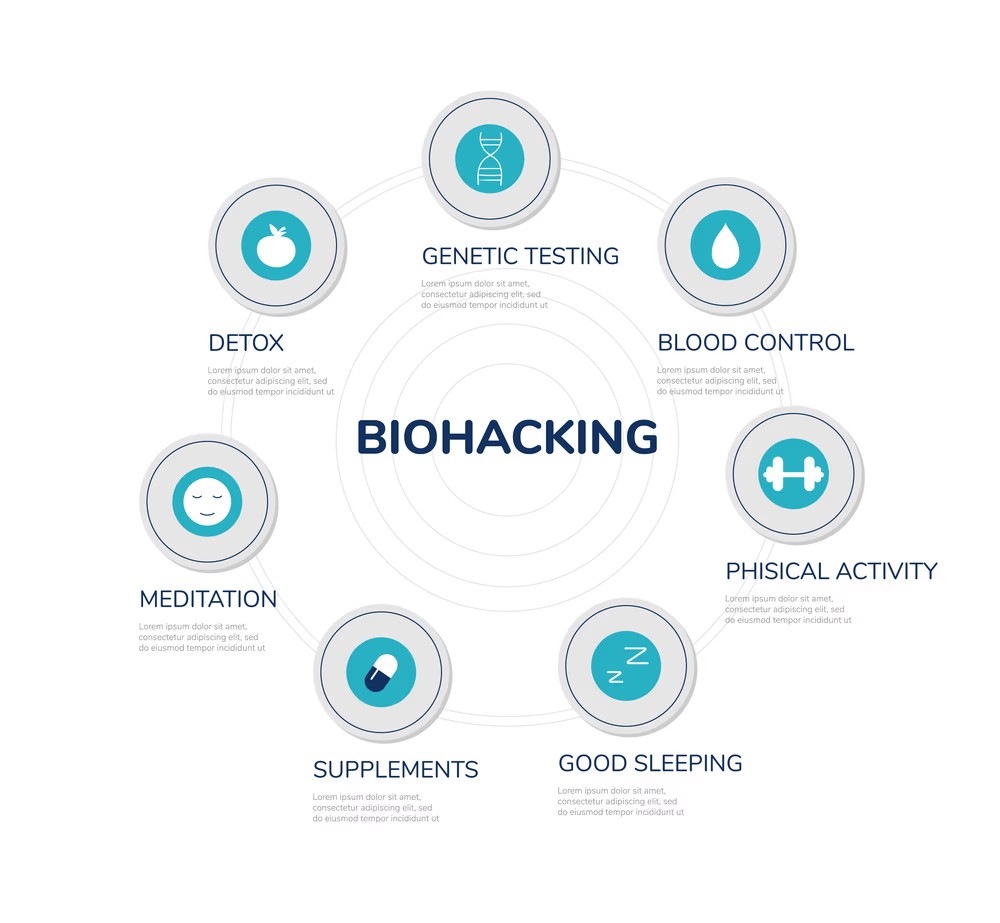
At its core, biohacking (also known as “DIY biology”) is the practice of making small incremental changes to your diet, lifestyle, and environment to improve your health and well-being. Think of your body as a high-performance vehicle. Biohacking is the “tuning” process that ensures the engine runs smoothly, the fuel is high-grade, and the software is updated.
It works by leveraging epigenetics—the study of how your behaviors and environment can cause changes that affect the way your genes work. While you can’t change your DNA sequence, you can change how your body expresses those genes. By giving your body the right signals (like specific light, temperatures, or nutrients), you can “flip the switch” on longevity genes and turn off the ones associated with rapid aging.
Why Should You Care About Longevity Now?
Why start now? Because the damage that leads to “old age” diseases—like heart disease, cognitive decline, and metabolic issues—starts decades before you see the symptoms. By adopting a biohacking mindset in your 20s, 30s, or 40s, you are essentially building a “health pension.”
The benefits are immediate:
Mental Clarity: No more afternoon brain fog.
Sustained Energy: Feeling “good” shouldn’t require five cups of coffee.
Better Sleep: Waking up actually feeling refreshed.
Resilience: Recovering faster from workouts and stress.
10 Simple Science-Backed Biohacking Habits for 2026
You don’t need to do all ten at once. Pick two or three that resonate with you and build from there. Consistency is the ultimate biohack!
1. Master Your Circadian Rhythm
Your body has an internal 24-hour clock that regulates everything from hormones to digestion. The most effective way to hack this is through light exposure.
The Hack: Get 10 minutes of direct sunlight in your eyes (without sunglasses) within 30 minutes of waking up. This triggers a cortisol spike to wake you up and sets a timer for melatonin production 16 hours later.
Evening: Use “Night Shift” mode on your devices or wear blue-light blocking glasses after sunset to protect your sleep quality.
2. Embrace Strategic Cold Exposure
You’ve probably seen people jumping into ice baths. There’s a reason for the madness! Short bursts of cold stress (hormesis) activate “brown fat,” which burns calories for heat and boosts your immune system.
The Hack: You don’t need a fancy tub. End your morning shower with 30–60 seconds of pure cold water. It’s an instant dopamine hit and builds mental toughness.
3. Intermittent Fasting and Time-Restricted Feeding
Giving your gut a break is one of the fastest ways to trigger autophagy—your body’s internal cellular “cleanup” process where it recycles old, damaged cells.
The Hack: Start with a 12:12 window (eat for 12 hours, fast for 12). Gradually move to 16:8. In 2026, the focus has shifted from “not eating” to “aligning eating with daylight.” Try to finish your last meal at least 3 hours before bed.
4. Optimize Your “Sleep Hygiene”
Sleep is the ultimate longevity drug. It’s when your brain flushes out toxins.
The Hack: Keep your bedroom at roughly 18°C (65°F). A cool core temperature is a biological signal to the brain that it’s time to sleep. Also, ditch the phone—the scrolling keeps your brain in “active” mode.
5. Practice Breathwork for Nervous System Control
Most of us are “chest breathers,” which keeps us in a state of low-level “fight or flight.” Biohacking your breath allows you to manually override your stress response.
The Hack: Try the 4-7-8 technique. Inhale for 4 seconds, hold for 7, and exhale slowly for 8. Do this before a stressful meeting or before bed to activate your parasympathetic nervous system.
6. Walk After Meals (The Glucose Hack)
Spikes in blood sugar lead to inflammation and aging. A simple 10-minute walk after lunch or dinner can significantly flatten your glucose curve.
The Hack: Don’t sit down immediately after eating. Even doing the dishes or a light stroll around the block helps your muscles soak up the glucose for energy instead of letting it sit in your bloodstream.
7. Magnesium: The “Master Mineral”
Most adults are deficient in magnesium, which is involved in over 300 biochemical reactions, including energy production and DNA repair.
The Hack: Look into a high-quality Magnesium Glycinate supplement before bed. It helps with muscle relaxation and deep sleep. (Note: Always consult your doctor before starting new supplements!)
8. Red Light Therapy (Photobiomodulation)
Red and near-infrared light penetrate the skin to reach the mitochondria—the “powerhouses” of your cells—boosting energy production and skin health.
The Hack: You can find affordable red light panels for home use. 10 minutes a day can help with skin collagen, inflammation, and even hair growth.
9. Prioritize Strength Training
Muscle is the “organ of longevity.” As we age, we naturally lose muscle mass (sarcopenia). Maintaining strength is the best predictor of how well you’ll move in your 80s.
The Hack: You don’t need to be a bodybuilder. Two or three full-body strength sessions a week are enough to keep your metabolism high and your bones strong.
10. Social Connection and Purpose
The longest-lived people in the “Blue Zones” have one thing in common: strong social ties. Loneliness is biologically as damaging as smoking 15 cigarettes a day.
The Hack: Make “social fitness” a priority. Schedule a weekly coffee date, join a club, or simply call a friend. Your telomeres (the caps at the end of your DNA) actually stay longer when you feel connected and supported.
The Challenges of Biohacking
It’s easy to get carried away. Here are the pitfalls to avoid:
The “Shiny Object” Syndrome: Don’t buy a $5,000 gadget before you’ve mastered the basics like sleep and hydration.
Ignoring Bio-Individuality: What works for a 25-year-old male athlete might not work for a 45-year-old woman balancing work and kids. Listen to your body.
Data Obsession: Wearables like Oura rings or Apple Watches are great, but don’t let a “low readiness score” ruin your day if you actually feel fine.
Future Trends in Longevity
As we move toward 2030, keep an eye on these emerging fields:
Biological Age Testing: Instead of just tracking birthdays, we’ll use blood and saliva tests to track our “DNA methylation” age.
Nutrigenomics: Personalized diets based on your specific genetic makeup.
Senolytics: A new class of supplements and medicines designed to specifically kill “zombie cells” that cause inflammation.
Conclusion: Start Small, Live Large
Biohacking sounds intimidating, but at its heart, it’s just a return to a more natural way of living, aided by modern science. It’s about realizing that you aren’t a victim of your genetics—you are the architect of your health.
You don’t need to change your entire life overnight. Pick one habit from the list above—maybe it’s the cold shower or the morning sunlight—and commit to it for seven days. Notice how your energy shifts. Notice how your focus sharpens.
Longevity isn’t just about adding years to your life; it’s about adding life to your years. Here’s to a healthier, optimized you!
No Responses