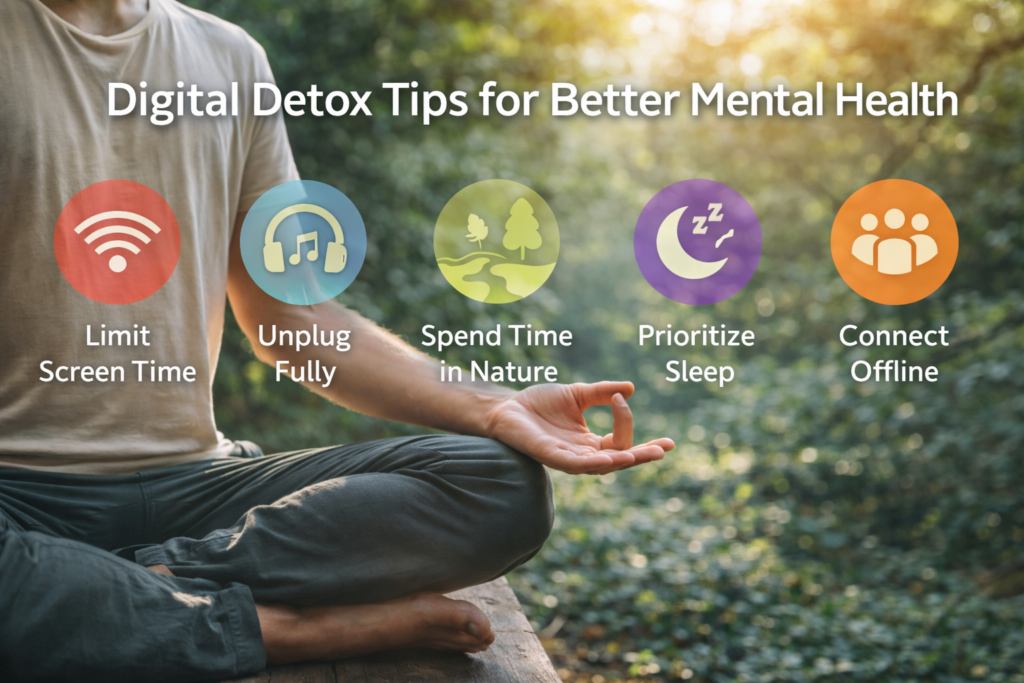
Think back to the last time you sat in silence for ten minutes—no phone, no tablet, no “quick check” of your notifications. Hard to remember, right? In 2026, we aren’t just using technology; we are essentially living inside it. While our devices have made life infinitely more convenient, they’ve also turned our brains into high-speed processors that never get to hit the “power off” button.
This constant state of “always-on” connectivity is leading to what experts call Digital Burnout. We are more connected than ever, yet record numbers of people report feeling lonely, anxious, and physically exhausted. Enter the Digital Detox: a deliberate, mindful break from the glowing screens that dominate our lives. It’s not about throwing your smartphone in a lake; it’s about reclaiming your time, your focus, and your sanity.
Ready to take back control? Let’s dive into the ultimate guide to digital detoxing for your mental well-being!
What is a Digital Detox and Why Do You Need It?
A digital detox is a designated period during which you voluntarily refrain from using digital devices such as smartphones, computers, and social media platforms. Think of it as a “system reboot” for your brain.
The Science of the Screen: Every time you receive a “Like,” a message, or a news alert, your brain releases a tiny hit of dopamine—the “reward” chemical. Over time, your brain starts craving these hits, leading to compulsive phone-checking habits. This constant stimulation keeps your nervous system in a state of “fight-or-flight,” elevating cortisol (stress hormone) levels and making it nearly impossible to experience deep, restorative rest.
Research in 2026 shows that even a 72-hour break from non-essential tech can noticeably lower anxiety levels, improve memory formation, and help reset your circadian rhythm.
1. The “Digital Curfew”: Reclaim Your Sleep
One of the most effective tips for an immediate mental health boost is establishing a digital curfew. The blue light emitted by screens suppresses melatonin, the hormone that tells your body it’s time to sleep.
The Rule: Turn off all screens at least 60 to 90 minutes before you intend to sleep.
The Strategy: Replace scrolling with “analog” activities. Read a physical book, try some light stretching, or use a Guided Meditation App (set it and put the phone face down!).
Pro Tip: Invest in an old-fashioned alarm clock. If your phone is your alarm, it’s the last thing you see at night and the first thing you grab in the morning. Breaking that first-thing-in-the-morning scroll is a game-changer for your daily mood!
2. Create “No-Phone Zones” in Your Home
Your physical environment heavily influences your habits. If your phone is always within arm’s reach, you will use it. By designating specific areas as tech-free, you create “sanctuaries” for human connection and reflection.
The Dining Table: Make meals a time for tasting your food and talking to your loved ones. No “phubbing” (phone-snubbing) allowed!
The Bedroom: This should be a place for rest and intimacy, not work emails or TikTok rabbit holes.
The Bathroom: Seriously! Using your phone in the bathroom is a prime example of “phantom usage” where we fill every second of silence with stimulation. Leave it at the door.
3. Declutter Your Digital Environment
We often talk about physical minimalism, but Digital Minimalism is just as crucial for mental clarity. A cluttered home screen leads to a cluttered mind.
Audit Your Notifications: Go to your settings right now. Turn off everything that isn’t from a real human (like texts or calls). You don’t need a buzz every time a random brand sends an email or someone posts a story.
The “One-Screen” Rule: Keep only your essential, non-addictive apps (Maps, Calendar, Notes) on your home screen. Move social media and games into folders on the second or third page.
Greyscale Mode: This is a 2026 favorite! By turning your phone screen to greyscale (black and white), you strip away the bright, “candy-colored” icons designed to grab your attention. It makes your phone significantly less addictive instantly.
4. Practice “Productive Boredom”
In our hyper-connected world, we have lost the art of being bored. But boredom is the birthplace of creativity. When you stop scrolling, your mind is forced to wander, leading to new ideas and self-reflection.
Replacement Activities: Don’t just “quit” your phone; replace it. When you feel the itch to check your device, try:
Journaling: Writing your thoughts down on paper helps process emotions.
Nature Walks: Spending just 20 minutes outside without a phone (the “20-20-20 rule”) reduces eye strain and lowers blood pressure.
Micro-Hobbies: Keep a sketchbook, a puzzle, or a musical instrument nearby for those 5-minute gaps of time.
5. Use Technology to Defeat Technology
It sounds ironic, but some of the best tools for a digital detox are actually digital. In 2026, Digital Wellbeing features have become incredibly sophisticated.
App Timers: Set a hard limit on “problem apps.” Once you’ve hit 30 minutes on Instagram, the app locks for the day.
Focus Modes: Use “Work” or “Personal” focus modes to silence work emails during the weekend and social media during work hours.
Deep Work Tools: Apps like Freedom can block the internet across all your devices for a set period, forcing you into a “flow state.”
Challenges: Why It’s Hard (And That’s Okay!)
Let’s be honest—digital detoxing is hard. You might experience FOMO (Fear of Missing Out), or even “phantom vibrations” where you think your phone is buzzing when it isn’t.
Social Pressure: We feel a “duty” to respond instantly. The Fix: Set an automated “Out of Office” reply or a status on WhatsApp letting people know you are offline for a few hours.
The “Work” Excuse: “But I need my phone for work!” The Fix: Use a separate device for work if possible, or strictly use desktop versions of apps so you aren’t tempted by your mobile feed.
Withdrawal: You might feel restless or irritable on day one. This is normal! It’s your brain resetting its dopamine pathways. Stay the course—the clarity on day three is worth it.
Future Trends: The Rise of “Neurowellness”
As we look toward 2027 and beyond, the trend is shifting from “measurement” to “sensation.” We are seeing:
Screen-Free Tourism: Tech-free retreats and hotels where guests hand over their devices at check-in are becoming mainstream.
Mindful Hardware: A rise in “dumb phones” or e-ink devices that prioritize reading and essential communication over mindless scrolling.
AI Wellness Filters: AI that automatically hides stressful news or toxic comments during your “sensitive” hours (like late at night).
Conclusion: Reclaiming Your Human Experience
A digital detox isn’t about hating technology; it’s about loving your life more. It’s about ensuring that the tools we use to connect with the world don’t end up disconnecting us from ourselves.
Start small. Try a “Screenless Sunday” or just a phone-free morning. You’ll be amazed at how much bigger the world feels when you aren’t looking at it through a 6-inch glass window. Your mental health isn’t just a priority—it’s the foundation of everything else you do. Give your brain the break it deserves.
No Responses