Beyond Prompt Filtering: How to Defend Enterprise Infrastructure From Rogue AI Agents
AI agents can execute commands and access live enterprise systems. Here are the runtime controls, permissions, […]
What to Do First in an Incident Response Investigation
Key Takeaways The key focus of an incident response investigation is to create sufficient context to […]
Australia Warns AI Agents Could Exploit Its Aging Technology: Cyber Chief Calls for Early Warning System
Australia’s cyber chief warns AI agents could expose vulnerabilities in aging technology and calls for an […]
Apple’s New Watches Can Listen Without Recording You — So How Does Secure Exclave Work?
Apple’s new Watch audio features rely on Secure Exclave to isolate raw data, but enterprises still […]

Deception Technology Implementation Best Practices: A Practical Guide for Enterprise Security Teams
Key Takeaways Define deception goals around detection speed, threat intelligence, and team capacity before choosing a […]
From JADEPUFFER to Multi-Agent Intrusions: The Next Wave of Autonomous Attacks
Key Takeaways JADEPUFFER proved one AI agent could run a full attack chain without a human […]
Why Internal Attack Surface Management Needs Continuous Network Visibility
Key Takeaways Static inventories confirm asset existence, but continuous visibility reveals real-time security risks, active behavior, […]
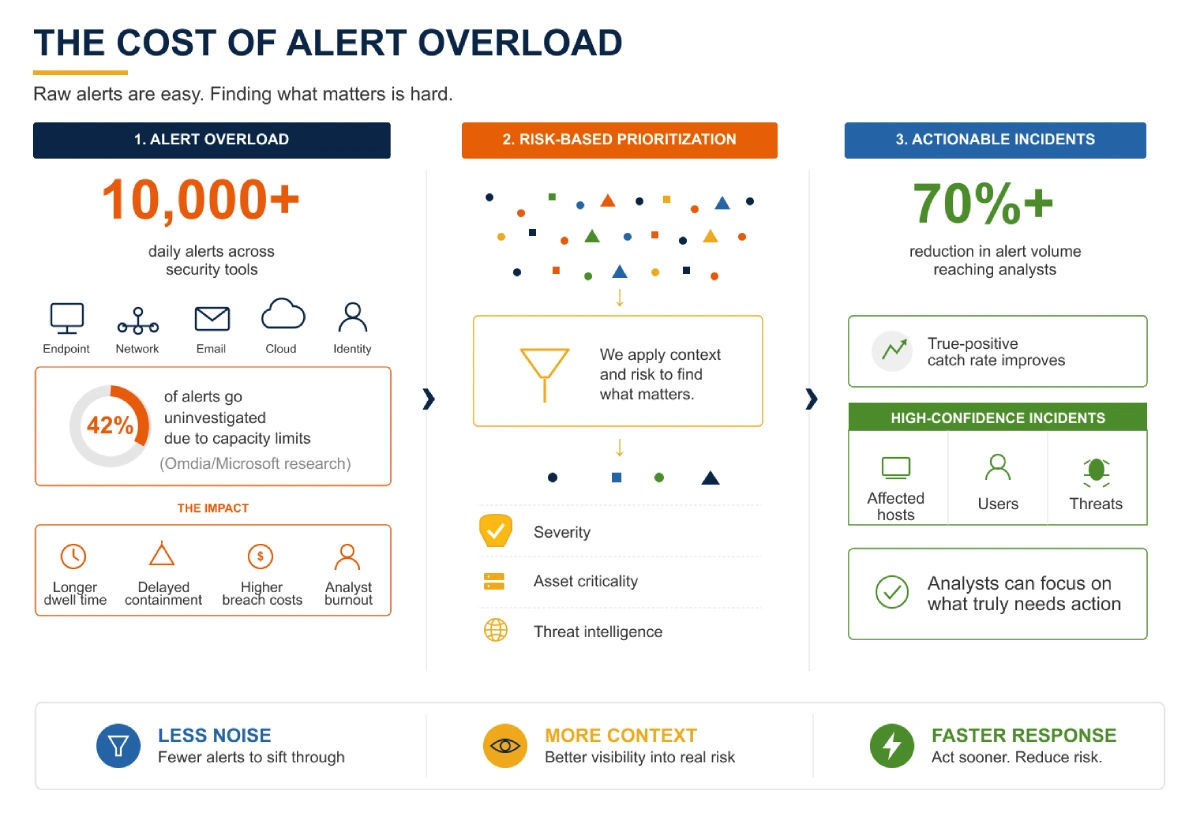
Alert Prioritization in Security Operations: How Fidelis Helps Focus on the Threats That Matter
Key Takeaways Enterprise SOCs handle thousands to tens of thousands of alerts a day, and up […]
How to Test a DDoS Incident Response Playbook with Tabletop Exercises
Key Takeaways Use tabletop exercises to test DDoS response plans without generating attack traffic. Build scenarios […]
Fed Warns AI Can Chain Cyber Exploits as Its Own Security Governance Falls Short
The Fed warns frontier AI can automate exploit chains at machine speed while its own cybersecurity […]